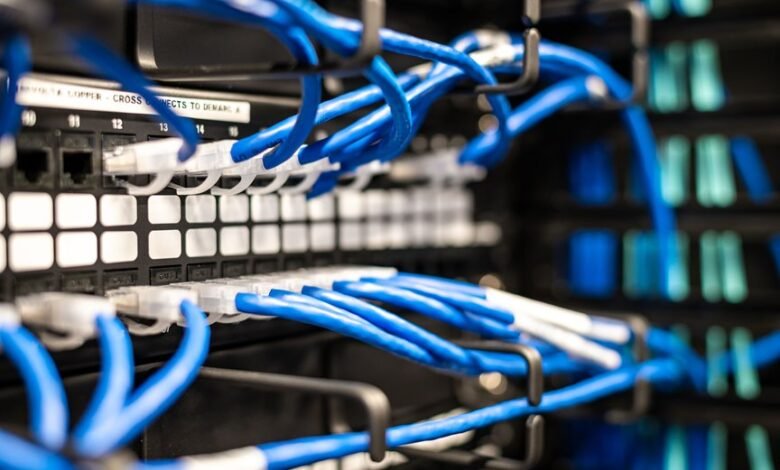
The 10.10.8 Network Configuration and Access Guide defines a private, scalable layout with explicit subnets, IP schemes, and access boundaries. It emphasizes predictable routing, device authentication, and policy-driven enforcement at network edges. Governance is centralized with auditable logs, standardized incident workflows, and continuous monitoring. The document frames secure access and role-based authorization within automated maintenance. It points to ongoing challenges and the need for disciplined execution, inviting further examination of implementation details.
What Is the 10.10.8 Network and Why It Matters
The 10.10.8 network is a reserved private address range used within many internal IT environments to segment and manage host connections. It provides controlled boundaries for devices, services, and traffic, enabling predictable behavior and auditing. Subtopic mismatch, if present, reveals misaligned roles or segmentation goals. Unrelated scope risks drift, complicating policy enforcement and incident response within a constrained, freedom-minded infrastructure.
Plan Your Subnets, IPS, and Access Boundaries
Plan subnets, IPS, and access boundaries by defining a structured address scheme that aligns with security and performance goals. Subnet planning informs IP allocation, ensuring scalable growth and predictable routing. Access boundaries delineate trust zones and enforce a boundary policy. Device authentication supports secure onboarding, while maintenance automation sustains updates, auditing, and policy drift detection for resilient network operation.
Secure Access: Authentication, Devices, and Policy Enforcement
Secure access hinges on robust authentication, reliable device identification, and enforceable policy controls. The approach emphasizes secure authentication methods, continuous device verification, and granular policy enforcement across network edges.
Device policy, role-based access, and context-aware decisions combine to reduce risk. Centralized governance, auditable logs, and scalable enforcement ensure consistent posture without compromising operational freedom or agility.
Troubleshooting and Ongoing Maintenance for Reliability and Scale
Operational reliability hinges on structured troubleshooting and proactive maintenance that scale with demand. The section outlines standardized incident workflows, continuous monitoring, and periodic audits to sustain performance. Latency profiling identifies outliers and informs tuning, while route optimization reduces transits and jitter. Documentation, change control, and automated rollback minimize disruption, enabling scalable, resilient operation for evolving network demands.
Frequently Asked Questions
How Is 10.10.8 Assigned to Guest Devices?
The 10.10.8 address is dynamically assigned to guest devices via DHCP, with reserved lease times and isolation policies enforced. Unrelated topic; Irrelevant scope considerations aside, a device receives temporary addressing independent of user intent, enabling controlled, flexible access.
What Are Typical Latency Targets for This Network?
Latency targets for this network typically range from single to low double-digit milliseconds under standard load, with bandwidth provisioning scaled to demand spikes; subtopic not relevant to other h2s, ensuring efficient, flexible operation for unconstrained audiences.
Can IPV6 Be Routed Within 10.10.8?
Yes, ipv6 routing is feasible within 10.10.8, enabling direct IPv6 paths. The design supports guest devices assignment and efficient subnetting while preserving freedom; configuration emphasizes concise, precise rules for routing and isolation.
How Is Change Management Handled for Subnets?
Change management governs subnet changes through formal approval, documented baselines, and periodic audits. Subnet governance enforces allocation policies, tagging, and lifecycle tracking, ensuring risk is minimized while empowering engineering teams to implement controlled network segmentation and rapid, compliant updates. change management, subnet governance
What Disaster Recovery Options Exist for This Network?
Disaster recovery options include defined disaster recovery planning with RTO and RPO targets, plus backup site options, tested regularly. The approach emphasizes rapid failover, data integrity, and isolation; governance remains minimal yet structured for freedom-minded environments.
Conclusion
The guide’s precision proves impeccably reassuring: subnets, IPS, and access walls stand immutable, guiding every packet to its ordained destiny. Ironically, despite centralized governance and auditable logs, human error remains the quiet collaborator—how predictable. Yet with policy-driven enforcement and automated maintenance, reliability finally breathes, even if its favorite hobby is showing up in blame assignments. In short: scale is orderly, problems are documented, and the network pretends to run itself—until it doesn’t, then we all know where the logs live.