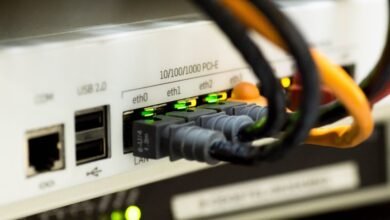
The 55.84.13 IP address presents a compact view of exposed surfaces and potential threat vectors. Its footprint across services, origins, and history requires verification through authoritative metadata and corroborating records. Interpreting signals from logs demands disciplined correlation of patterns and timing to reveal red flags. Immediate steps emphasize containment, segmentation, and rigorous documentation to sustain resilience, while offering a clear path to reproducible findings and auditable decisions—a path that invites careful scrutiny of the underlying data.
What 55.84.13 Reveals About Your Threat Surface
Understanding what a single IP address—55.84.13—reveals about an organization’s threat surface requires a focused, data-driven approach; the address serves as a gateway into broader network exposure.
The IP address indicates exposed services and potential attack vectors, shaping the threat surface assessment.
False positives, geo spoofing, and behavioral patterns must be considered to avoid misinterpretation and maintain operational freedom.
How to Verify the Address’s True Origin and History
To verify an IP address’s true origin and history, practitioners begin with authoritative metadata checks and cross-reference results across multiple, independently sourced records. This process emphasizes data provenance, reproducibility, and minimal assumptions. It uses robust network registries, routing snapshots, and historical allocations to verify origin and trace history, ensuring transparency while maintaining operational freedom for security decisions and proactive threat assessment.
Interpreting Activity Signals and Red Flags From Logs
Analyzing logs for anomalous activity requires a disciplined, data-driven approach that distinguishes normal operations from potential threats.
Interpreting activity signals involves correlating event types, timings, and source vectors to identify patterns, anomalies, and red flags.
Analysts separate signal from noise, avoiding unrelated topic distractions and off topic analysis while prioritizing reproducible findings and proactive alerting to enable rapid containment and investigation.
Practical Defense Steps: Contain, Contain, and Tighten Security Across Networks
Immediate containment and rapid containment sequencing are essential to halt ongoing compromise and prevent lateral movement across networks. The analysis translates into practical steps: segment networks, isolate affected hosts, deploy containment playbooks, and tighten controls with minimal disruption. Defense priorities guide rapid triage, while threat modeling informs prioritization of mitigations. Documentation ensures accountability, resilience, and auditable improvements across evolving threat landscapes.
Frequently Asked Questions
How Often Does 55.84.13 Change Ownership or ASN?
The ownership and ASN for 55.84.13 can change irregularly, driven by registry reallocations and routing changes; monitoring requires data ownership awareness and routing analysis to detect shifts promptly and assess impact on services and governance.
What Privacy Risks Does 55.84.13 Pose for Users?
The privacy risk vs data exposure is tangible: 55.84.13 can reveal network patterns, inviting correlation if compromised. Tracking resistance vs user consent hinges on anonymity controls, proactive monitoring, and minimizing retained logs to safeguard freedom.
Can 55.84.13 Be Spoofed in DNS or HTTP Requests?
Spoofing DNS and spoofing HTTP can be technically feasible under misconfigurations or attacker control of resolvers and proxies, though proper defenses mitigate most risks. Vigilant validation, DNSSEC, TLS, and integrity checks reduce susceptibility and preserve user autonomy.
Which Regions or ISPS Predominantly Route 55.84.13 Traffic?
Regional routing dominates where 55.84.13 originates, with ISP attribution showing concentration in major national networks and backbone providers. The data indicates consistent interconnectivity patterns, suggesting predictable transit paths and measurable regional routing influenced by ISP attribution.
Are There Legal Considerations When Analyzing 55.84.13 Activity?
A hypothetical audit reveals legal compliance implications exist when analyzing 55.84.13 activity. The practice must address data retention considerations, privacy laws, regulator inquiries, and ensure governance controls, documenting every step to satisfy legal compliance implications and privacy requirements.
Conclusion
The document concludes that 55.84.13 serves as a revealing lens into an organization’s exposed threat surface, demanding rigorous provenance checks and diversified metadata to validate legitimacy. It emphasizes reproducible findings, disciplined signal interpretation, and timely containment. By weaving cross-record corroboration with segmentation and documented response, defenders can tighten defenses without compromising analytics. In closing, this approach operates like a meticulous clock—each component aligned, every tick a verifiable safeguard against evolving threats.